2026 Oscar Reviews: 'Frankenstein'
March 10, 2026
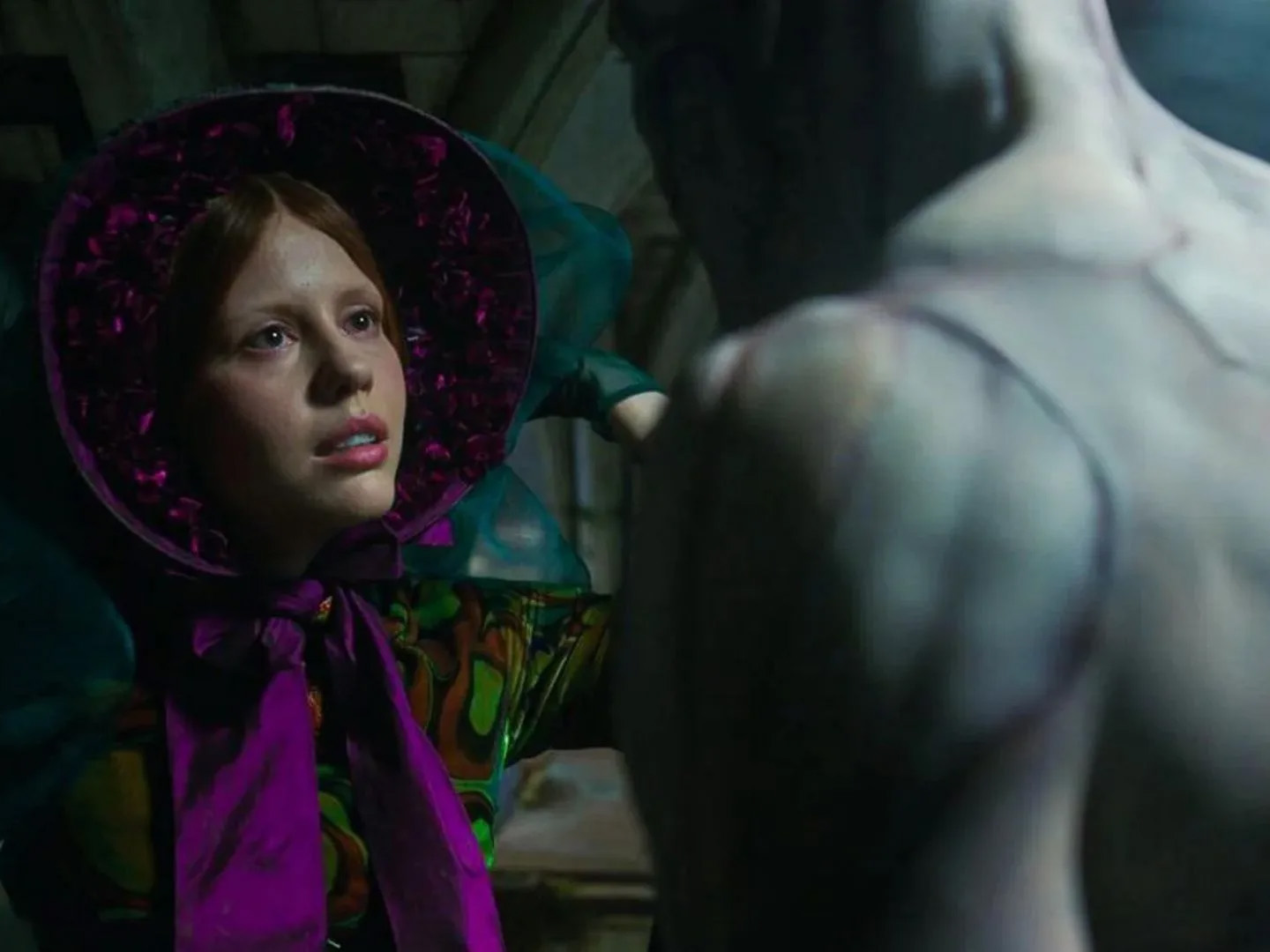
It is not possible for me to consider this movie without collating against the original, so I’ll leave that to others. And I should start by saying two things. First: in some ways, the new Frankenstein simplifies (a fact that is neither immediately “good” nor “bad”) the more complicated fabric that Mary Shelley wrought as a nineteen- year-old woman in 1816. Second: I prefer Shelley’s original, although it’s also true that in the majority of fiction-to-film enterprises, I do usually prefer the original.
Having offered these caveats, Del Toro’s adaption is certainly intriguing and even arresting in its various departures and I’ll sketch some of the reasons this is so.
Plot: Del Toro reimagines the storyline as an expression of toxic father-son relations (father/Victor, Victor/Monster), the horrors of abusive generational inheritance within patriarchy (here recast in a late 1850s Victorian context), and the possibility of correction.
Aesthetics: First, the film boasts a crudely colored Gothic palette (black, white, red, contrasted by an Elizabeth-associated greenness), a kind of pathetic fallacy that expresses Victor’s contaminated and limited thought processes. Two, the film’s CGI animals are clumsy. A critic might argue that such clumsiness is an example of form and content working together; clunky effects amplify the unnaturalness of Victor’s own machinations. Ditto the overblown production values and ornate architectural details that generate unreality and uncanniness.
Characters: Gone are Clerval and Justine (and Caroline), thus eradicating energies that have sometimes been described as queer-coded. At the same time, Del Toro flattens both Victor (villain) and Monster (not-villain). Elizabeth, meanwhile, is more fleshed-out (helped in part by the movie being set half a century later than the novel, such that she is something of a scientist herself). This can be seen as antidotal to Elizabeth’s rather absent presence in the novel (due to Victor’s limited point-of-view), where her insistence during Justine’s trial, “I wish to be allowed to speak, that I may say what I know,” betrays a broad submerged complexity within nested narrative layers (equivalent to the monster’s own forced suppression).
Having eradicated Justine, the movie, while elevating Elizabeth, abandons this subtle Elizabeth-Monster connection established by their twin silencing for a superficial visual connection (Monster’s sewn-together self, her green piece-work dress) and the suggestion of mutual love-pining between her and Monster (here, the superficial connection between his sewn-togetherness and her bandage-y bridal dress bring her into the intertextually allusive zone of the Bride of Frankenstein). Lastly, Del Toro’s Victor is anti-charismatic, jibing with what Shelley’s readers know: Victor Frankenstein may be the titular protagonist, but Monster is the most interesting character, which is why “Frankenstein” is the name readers have always wanted to give the Monster and his main character energy.
Structure: Gone are the letters and layers that suggest the energies of stories untold. But I appreciated how the movie hewed to the book’s arctic beginning, as opposed to just ending there. The sense of cycle is meaningfully countered by the Monster’s forgiveness of father/creator/author, suggesting the breakability of toxic patriarchal inheritance. This is especially so since the movie begins with richly intertextual visual references to paintings (Caspar David Friedrich, Das Eismeer and Wanderer Above the Sea of Fog) that famously express what’s critically termed the masculine sublime, and closes with the Monster gazing out like the world’s own new beginning at the sunrise in reprisal of the so-called female sublime presented by Friedrich’s exalted lady of Woman Before the Rising Sun (Woman Before the Setting Sun).
If you’ve read the novel, see the movie. If you haven’t read it, see it and then read. Mary Shelley’s own life begs for riffing on what it means for authors to disappear into the lives of offspring, just as her own mother, Mary Wollstonecraft, oft-lauded as the mother of Enlightenment feminism, died of postpartum infection (like Victor’s mother in this movie) when a male doctor failed to clean his hands before delivering the placenta after Shelley herself had emerged from the womb.
– Rivka Swenson, Ph.D., associate professor in the Department of English, College of Humanities and Sciences