Creative writing MFA and former VCU instructor leads Appomattox Regional Governor’s School English Department
March 9, 2026
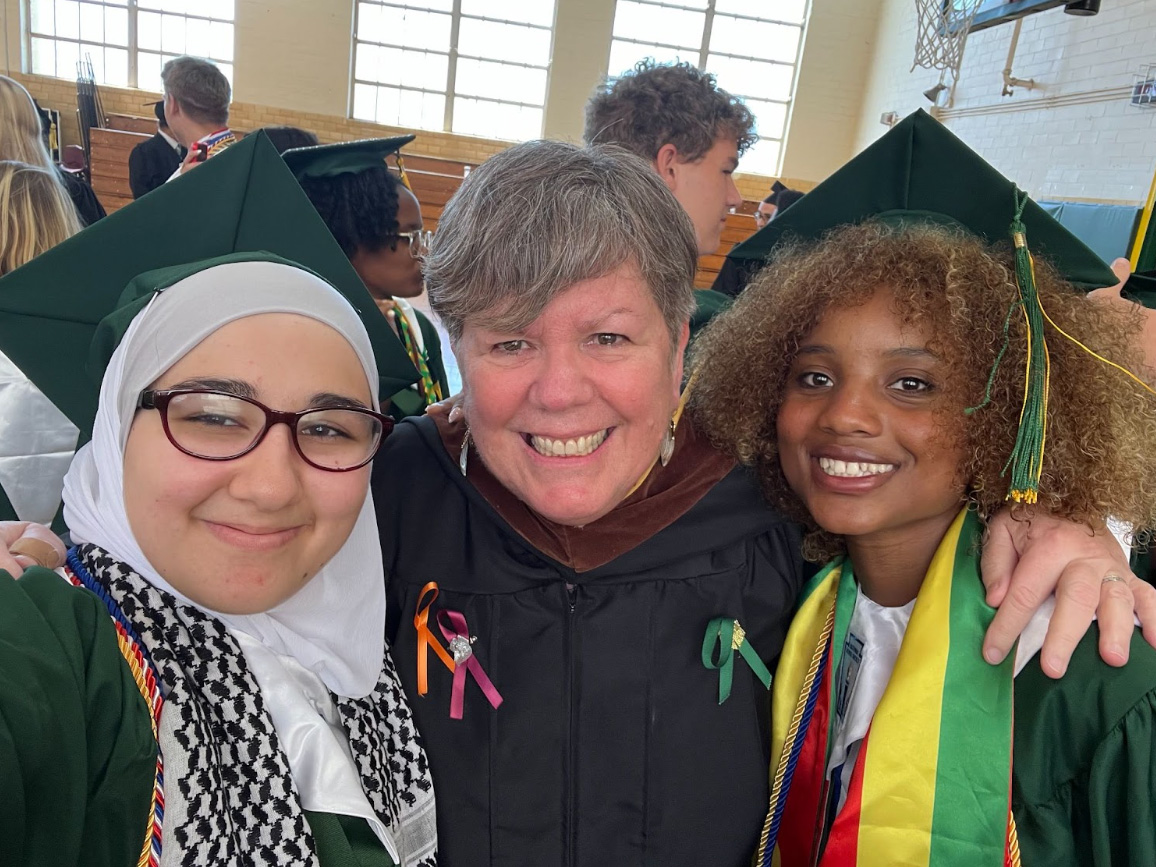
Patty Smith (M.F.A.’01), lives a literary life, “a life spent wide awake,” she says. It’s a pursuit she has shared with her students throughout her career as an educator – a career that followed in the footsteps of her mother and aunts who were also teachers.
Smith was already a teacher when she returned to school in her 30s to pursue an M.F.A. in creative writing at VCU. The decision would open up new teaching opportunities for Smith who currently serves as the Department of English Chair at Appomattox Regional Governor's School and has taught at the school for two decades. Smith says her graduate degree made it possible to teach dual enrollment courses that bridge the gap and prepare high schoolers for higher education.
In addition to being an alum, Smith is also a former instructor in VCU’s Department of English. While she was at the university, she was involved in the early years of the VCU Cabell First Novelist Award, an award tailor-made to be organized by one pursuing a literary life.
What drew you to VCU to pursue a Master of Fine Arts degree in creative writing?
When I was applying to M.F.A. programs, I thought I was going to pursue an M.F.A. in nonfiction. And although at that time, VCU didn’t offer a nonfiction track, Marita Golden was offering a year-long nonfiction course, and that appealed to me.
Most other M.F.A. programs lasted for two years, and the three-year program at VCU appealed to me, too. When I spoke with other graduate students in other programs, they talked about the limitations of two year programs — i.e. you spend the first year adjusting and then during the second year, you’re getting ready to leave. I liked the idea of having that middle year to really focus on writing and not yet having to worry about what comes next.
I was in my late 30s when I applied to graduate school. I had been teaching full-time for 10 years already, and all along, I had also been writing and attending summer writing programs (Bennington, Provincetown FAWC and others). When a long-term relationship ended, I thought: Why not pursue my dream and go get an M.F.A.?
I chose VCU over other options because when I drove down to visit during my spring break everyone was so friendly that I thought: I want to attend this program! Also, students I spoke with in other programs emphasized that most of the graduate students were in their 20s and recent college graduates. The VCU program had other working adults and students of various ages and experiences. I loved that.
I also remember getting a phone call from Marita Golden who was head of the M.F.A. program at that time. She called to tell me they wanted me to attend the program and she wanted to have me in the year-long nonfiction class, and I thought, “Wow, if they are calling me to say they want me, then I want to go there!”
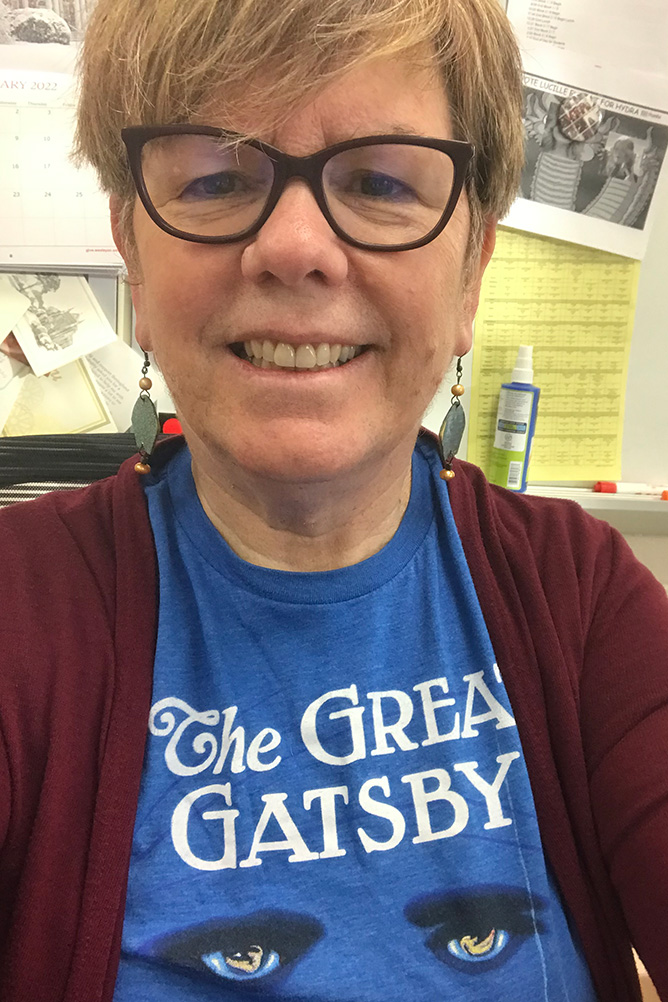 What is your favorite memory from attending VCU?
Our workshop classes in Anderson – led by Bill Tester, Tom De Haven and Marita Golden; the late night gatherings after workshop at The Village Cafe; my classmates who were all terrific, many of whom I still see and talk to; readings at 1708 Gallery; all the fabulous visiting writers: George Saunders, Jennifer Egan, Mark Richard, Lisa Zeidner, Bob Shacochis.
What inspired you to pursue a career in teaching? What has been your favorite aspect(s) of teaching at the university level and then at a magnet high school?
I have been teaching since I was 25. My mother was a teacher, and I had aunts who were teachers, so I guess it’s in my blood. When I first started teaching, I taught French. I lived in Paris for a couple years after college – and I previously studied in Paris during my sophomore year of college — and I wished I had had better French instruction when I was younger. So, I thought I’d try teaching French. I did that for 10 years in Andover, Mass., then taught in a combined fifth and sixth grade classroom in Cambridge, Mass., before I came to VCU.
At VCU, I had a graduate teaching assistantship and taught ENG 101 and ENG 200. After graduation, I taught first as an adjunct and then as a full-time non-tenure track instructor at VCU. I loved teaching Advanced Composition, Fiction, and ENG 200 Writing with Research – and some intro to French and one French class for Ph.D. students. Specifically, I loved teaching at VCU because of the various ages of my students. I loved having older, returning students in all my classes. They brought their experiences into our discussions which made for much richer and valuable learning for us all.
SJ Sindu, Ph.D., mentioned that you helped coordinate the VCU Cabell First Novelist Award while you were an instructor at VCU. What was the experience like working with that program that celebrates authors’ debut novels?
When I was first working as an adjunct, I also was allowed to audit Tom De Haven’s year-long novel workshop, since it hadn’t been taught during my three M.F.A. years. It was during that year that Tom De Haven and Laura Browder started the VCU First Novelist Award – which later became the VCU Cabell First Novelist Award. I jumped in right away to help and after that year, I sort of became the unofficial organizer and then did it more officially while I was a full-time instructor.
I solicited donations from agents and editors, scoured book reviews for debut novels that sounded strong, met editors at the annual Association of Writers and Writing Programs conference and encouraged them to send in books. For the festival itself, I coordinated travel with the winning author and their agent and editor, and, on a couple of occasions, I also moderated the panel discussion. I learned a lot. For at least three years, I also worked with and supervised an intern, an M.F.A. student who had been awarded the internship that would later become known as the Cabell Fellow. I also organized the reading schedule of all the books and encouraged fellow Department of English colleagues and students to read and evaluate the books. I loved it all.
Tell me about your current role as the Appomattox Regional Governor’s School's Department of English chair and instructor. What does your day-to-day look like?
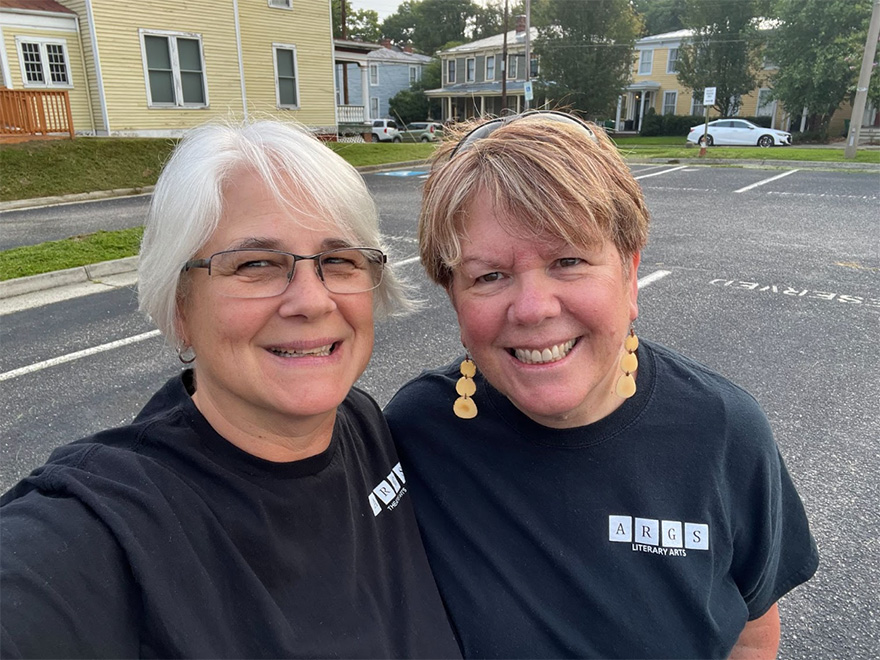 This is my 20th year at the Appomattox Regional Governor’s School for the Arts and Technology (ARGS). I have been an instructor of literary arts and English all that time, and, for the past five years, I’ve also been chair of the English department. I teach six classes.
This year, I have two sections of Dual Enrollment English 11, where students also receive college credit via Brightpoint Community College, one section of Fiction I, one section of Creative Nonfiction I, one section of Creative Nonfiction II, and one section of Creative Writing for nonmajors.
All freshmen literary arts majors take creative writing which introduces them to the genres of poetry, nonfiction and fiction as well as to the how to’s of workshopping and critiquing each other’s work. I teach the section of creative writing geared towards non-literary arts majors, and it is a class I have always loved.
Honestly, I love all my classes, though! My dual enrollment classes are a mix of college composition and American literature. Early on, I taught all the fiction classes and recently, I have been teaching creative nonfiction more often. We have a block schedule, so each day, I teach three blocks. I also sponsor the National English Honor Society, SPECTRUM (our gay-straight alliance), and our chapter of Girls Learn, International, a program sponsored by the Feminist Majority Foundation.
In addition to teaching, how has it been balancing your writing career?
Balancing teaching and writing has been a challenge. I’m not a great multi-tasker and I’m usually all in on what I’m doing.
When I wrote my novel, I was very motivated to get that novel out in the world, so I got up at 5 a.m. in the morning (sometimes at 5:30 a.m.) and I wrote until 6:30 a.m., five days a week. I had a couple writing get aways, too, which helped, including one of my favorites, at The Porches in Norwood, VA and a few other self-styled writing retreats.
During the pandemic, I found it difficult to write until I discovered a group that was meeting on Zoom, every Saturday, from 12 -1 p.m.. Run by memoirist Marsha Meier, the group met every week for THREE years! Marsha would give us prompts, and I started answering those prompts as the characters in a novel I was trying to write. In that way, I generated notebooks of scenes for my second novel. Now, I’m trying to cobble together time when I can write. I just spent a long weekend in the Outer Banks with other writers for two days of concentrated writing; I’ve had another long weekend at The Porches; I have an all-day writing Zoom coming up. I’m trying to make the most of opportunities when I can. Why I’m not just getting up at 5 a.m. every day, I’m not sure --- maybe because I’m older. I’m also planning to retire from teaching in May and so am looking forward to writing more then. I’m headed to a three-week writing residency in France in September.
Writing is mostly solitary, so I find it invigorating to have time away with other writers where we can talk about our projects and help each other out and write!
What do you find most rewarding from writing?
I think one of the most rewarding things about writing is hearing from readers. I loved meeting with book groups and talking with them about my book! But of course, that’s really a rewarding thing about publishing. Writing in and of itself is rewarding. It’s how I make sense of the world. I think that writing demands/allows (I’m not sure which) that you pay attention to the world in a way you might not if you weren’t a writer. That might be the same for any artist. I also take a lot of joy in the crafting of sentences and figuring out how to say something in the exact right way.
What was it like publishing your first novel "The Year of Needy Girls"?
Publishing “The Year of Needy Girls” was, first, a dream come true. The entire experience was joyful! When I finished writing the manuscript, I sent it first to Kaylie Jones, whom I had known at Wesleyan. I knew she started an imprint at Akashic Books, and I thought she might tell me if I had something worthwhile. I had done everything I could do, and I wanted to know if it was good enough to publish. Imagine my surprise when she said she wanted to publish it. Of course, there were rounds of edits to do first, but I just loved having Kaylie shepherd my book out into the world. I had a fantastic book launch in Richmond at Babe’s. Ward Teft and Chop Suey Books (now Shelf Life Books) sold out of my book at the launch. And I had a NY launch at Bluestockings, where we also sold out of books. I created a book tour to cities where I knew people and so was guaranteed at least a small audience. The whole experience was lots of fun. I enjoyed every single minute. Truly one of the happiest times in my life.
Are you working on any writing projects now, or is there anything lately that you've wrote that you would want to highlight?
I am working on a second novel which benefits from a year that I spent in Senegal on a teaching Fulbright.
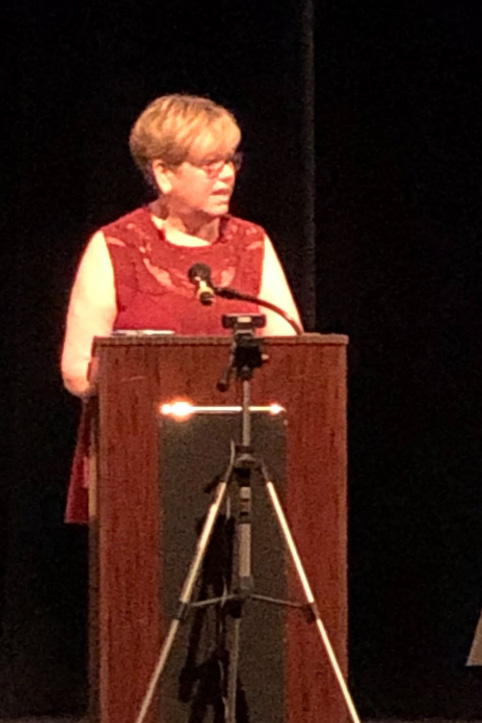 I also write a lot of nonfiction. If anyone is interested, they can head over to patricia-smith.com to get a sampling of some of my other writing.
What’s your why?
Why do I do what I do? I can’t imagine doing anything else. A literary life is worth pursuing, and I say that both as someone who writes and who studies and teaches literature and writing.
Helping students discover their voice and therefore their power is a humbling and fulfilling experience. Being around such smart, thoughtful and creative young people gives me tremendous hope for the future. So I feel lucky that I get to spend my day surrounded by incredible young people.
Several years ago, I gave the graduation speech to the VCU Department of English’s December ceremony, and I said then that a life spent reading and writing is a life spent wide awake. A literary life, I told the graduates, whether teaching or writing or continuing a lifelong engagement with literature is a life worth living. I still believe that.